
Study of housing in the mountains of Navarra

In 2025, the Department of Housing of the Government of Navarra commissioned Cederna Garalur conducting a study On the situation of housing in the rural Navarrese. It must be taken into account that the Cederna Garalur Association works in 130 municipalities, almost half of the rural territory of Navarra. In addition, this territory has urban characteristics that make it difficult to implement housing policies, such as the typology of housing based on individual CaaS and hamlets; the dispersion of the population in neighborhoods or councils; urban centers declared as heritage and consequently protected; dwellings occasionally inhabited as a second residence; the existence of tourist accommodation, etc.
In turn, this study is complementary to other initiatives of the Government Housing Department of Navarra, such as the design and implementation of the Navarra Rural Housing Strategyentrusted to Nasuvinsa.
Therefore, the objectives From the study of rural housing addressed from Cederna Garalur are:
- Diagnose housing situation in the mountains of Navarra.
- facilitate the transfer of knowledge in the management of the empty real estate park uninhabited in rural areas.
- encourage collaboration between the local entities of the Navarra mountain and the regional authorities.
- Design a strategic document that allows local entities to define housing policies in their municipalities.
1. Navarra Mountain Housing Table.
The objective of this working group is to promote the transfer of information and knowledge on housing issues between the different regions of the mountains of Navarra. Likewise, Cederna Garalur acts as a representative of the entities before the regional institutions, such as Nasuvinsa or the General Directorate of Housing.
The Housing Table is made up of 9 representatives of the associations of the Association in addition to the Presidency and Management of the entity:
- Baztan: Fernando Anbustegi (Mayor of Baztan).
- Bidasoa: Ladis Satrustegi (Mayor of Lesaka).
- Sangüesa Region: Kiko Martinez (Councilman of Sangüesa/Zangoza).
- Erro-Aezkoa: Mikel Etxarri (Councilor of Abaurrea Alta/ Abaurregaina).
- Mendialdea: Mikel UhartE (Councilman of Larraun).
- Pre-Pyrenees: Rocío Monclús (Mayor of Lumbier/Ilunberri).
- Sakana: Oihana Olaberria (Mayor of Arakil).
- Roncal: Carlos Anaut or Pedro Pilart (Councilors of Roncal/Erronkari).
- Valles- Ibarrak: Idoia Aritzala (Mayor of Etxauri).
- Cederna Garalur: Arantxa Arregui (President) e IBON MIMENTZA (manager).
Download memory
The study is available at the following link.
2. Design of a strategic document with proposals adapted to the rural environment
The objective of this study develop a work guide aimed at local rural entities that wish to implement increasing the affordable housing stock through the implementation of different measures.
The pilot area of work is the region of Sakana. This territory, made up of 15 municipalities, represents the urban characteristics of the entire mountain of Navarra: from municipalities made up of several councils whose main home is individual houses, to more urban models such as Alsasua/Altsasu or Etxarri-Aranatz. In addition, its problems are common to the entire mountain of Navarra. However, the work methodology is extensible to any rural municipality, whether or not from the mountain of Navarra.
The study is divided into four phases:
- Initial Situation: based on field work. Interviews with City Councils, Rehabilitation Office, Real Estate and Housing Service to collect information on: public and private developed promotions, rehabilitation licenses, state of buildings, updating of urban plans, demand for housing and its typology, tracking of housing offer.
- SWOT analysis: SWOT analysis from the perspective of capacity of the different localities to respond to the demand for new homes.
- Diagnosis: Diagnosis identifying the problem for the generation of new homes and/or response to existing demand.
Establish groups of localities with similar problems. - METHODOLOGICAL GUIDE: Propose a methodological guide to the municipalities to face the housing problem from the urban framework, proposing strategic lines, objectives and actions.
Due to its complexity and scope, in 2025 the first phase has been carried out and in 2026 the methodological guide will be completed.
3. Catalog of good housing practices in rural areas
Cederna Garalur Ha identified 10 housing projects from other autonomous communities. This work is complementary to the one carried out by Nasuvinsa, who has compiled initiatives developed in the Foral Community.
the projects collected They prioritize the rural environment or initiatives or measures that can be applied in rural areas, and are grouped into three categories:
- Housing cooperatives and community life: They refer to projects of housing cooperatives or collaborative housing in a regime of transfer of use. In these cases, we want to highlight the community management of certain services, the implementation of activities to reinforce the feeling of community, and the opening of it towards the municipality.
- Regulations and Regulations: Measures promoted by local entities to promote affordable access to housing. These regulations include from aid to rehabilitation, guides for local entities, models of contracts, or fees for empty housing.
- Housing Bank and Sensitization: These projects have in common belonging to a broader housing strategy, and in this case we have wanted to highlight two aspects: the work carried out to inventory the public and private housing available; know the status of said dwelling; and the information and awareness campaigns in a positive key aimed at those who have said homes to encourage them to bring these spaces to the market.
An explanatory sheet has been made for each project.
Download project report
An explanatory sheet has been made for each project.
4. Dissemination and communication
Among the communication actions, Cederna Garalur has published two reports in the regional newspaper Guaixe and El Diario de Noticias, with the purpose of offering a global look at the problems of rural housing. To do this, there are testimonies of interviews with institutional agents such as Elga Molina, general director of Housing, field technicians, local entities such as Oihana Olaberria and residents of Sakana.
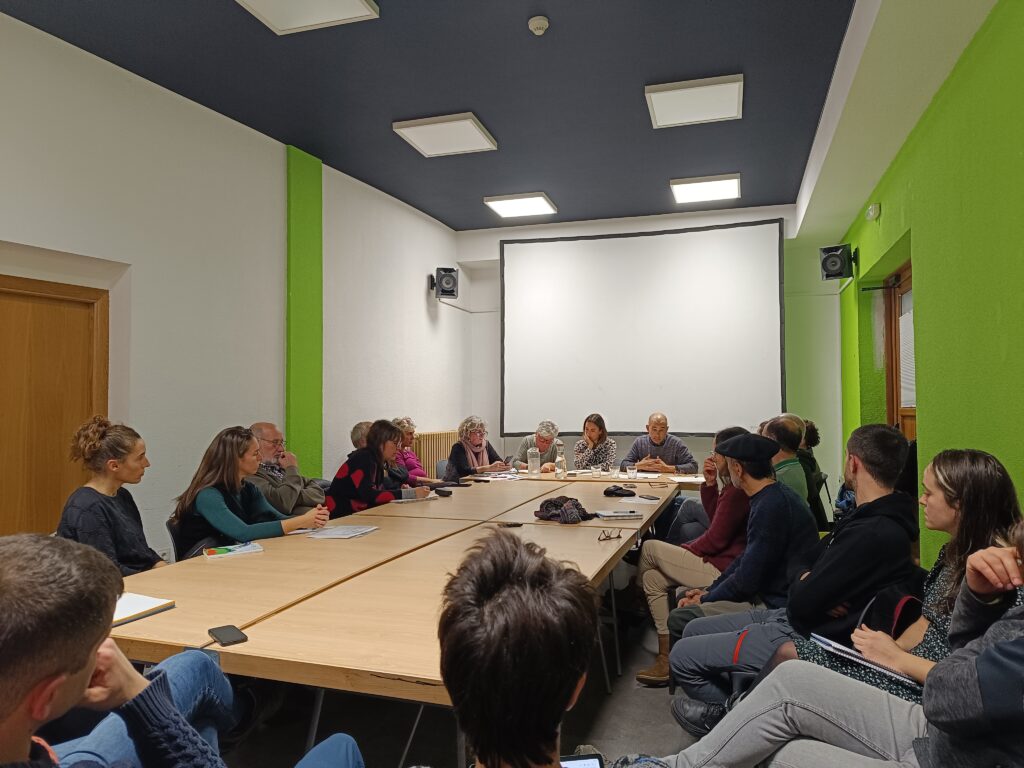
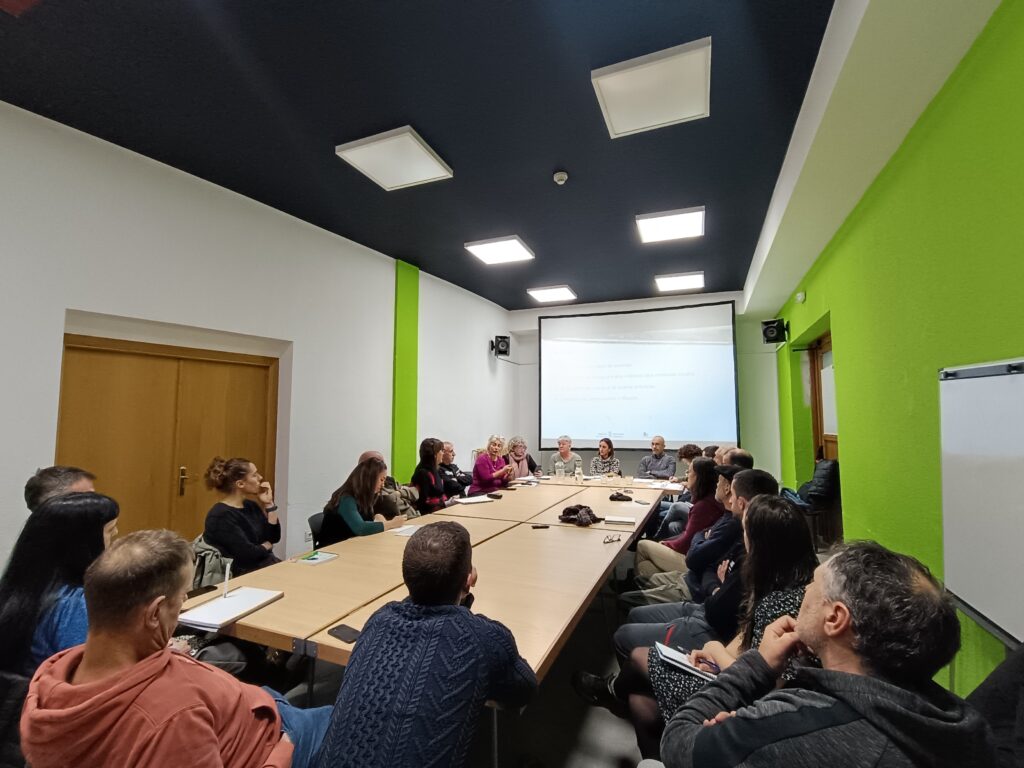
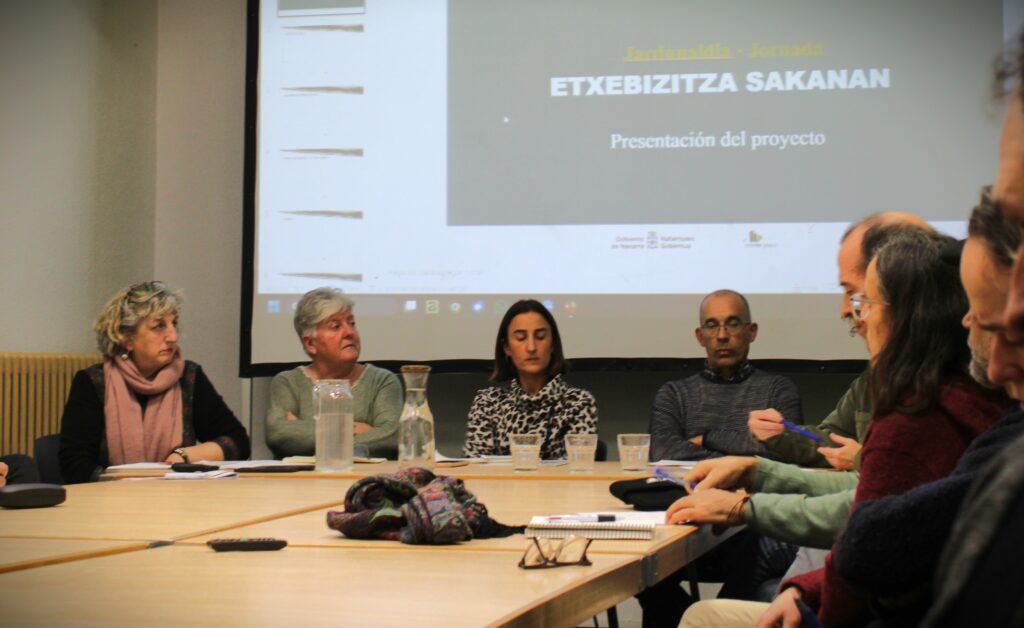
On the other hand, on November 26, a Closing Conference was held in Etxarri-Aranatz, which has been attended by 21 people.